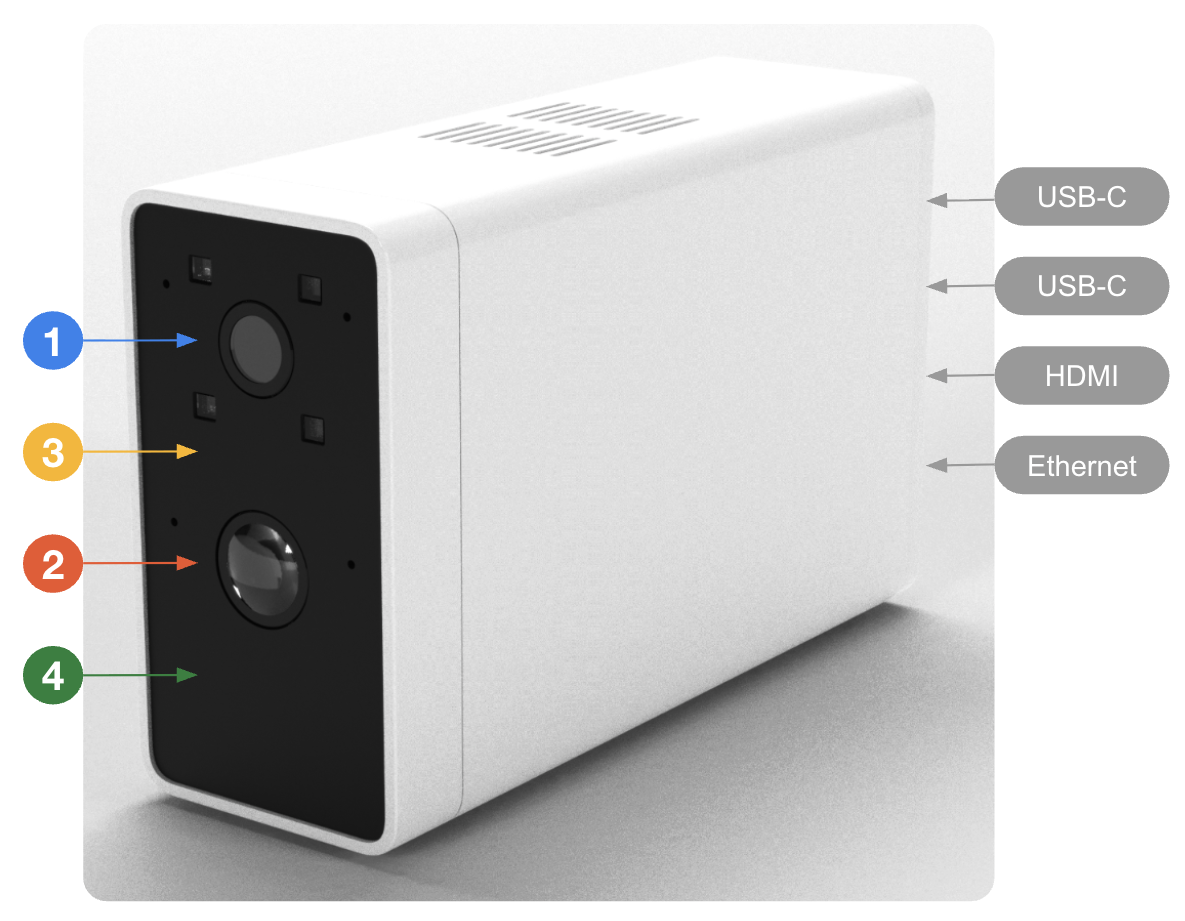
SatCam is a synchronized depth, vision, audio, and biosignal capture system. It understands an interview in real time, steers the interviewer with near-real-time cues, and compounds insight across every session.
An interview is one of the most consequential instruments a government or enterprise has — and one of the least instrumented. Two humans sit across a table. One asks questions. The other answers. A decision gets made. The evidence on which that decision rests is almost entirely in the head of the interviewer.
The result is a process that is slow, uneven, and hard to audit. Different interviewers reach different conclusions on the same person. Micro-expressions, stress responses, vocal cues, and linguistic contradictions — all fleeting, all unrecorded. Bias creeps in unchallenged. Backlogs pile up. When a decision is questioned later, there is no evidentiary trail that stands up to scrutiny.
Meanwhile, the best interviewers in the world draw on exactly these signals, whether they can articulate it or not. The problem isn't that the information isn't there. The problem is that only the human in the room has access to it — and even they have access only partially, imperfectly, and without a way to check their own work.
Credibility judgments differ between interviewers, between days, between moods. Two reasonable people can reach opposite conclusions on the same conversation.
The biometric and linguistic signals that actually drive a decision — the micro-expressions, the stress cues, the claim contradictions — are never captured in a form anyone can review later.
Without a common rubric, unconscious bias has nothing to push against. Drift between operators and between cohorts accumulates silently.
When a decision is challenged, there is no traceable evidence trail — only notes, memory, and a summary. Modern governance expects more.
Probabilistic assessment score + near-real-time interviewer suggestions displayed on-device.
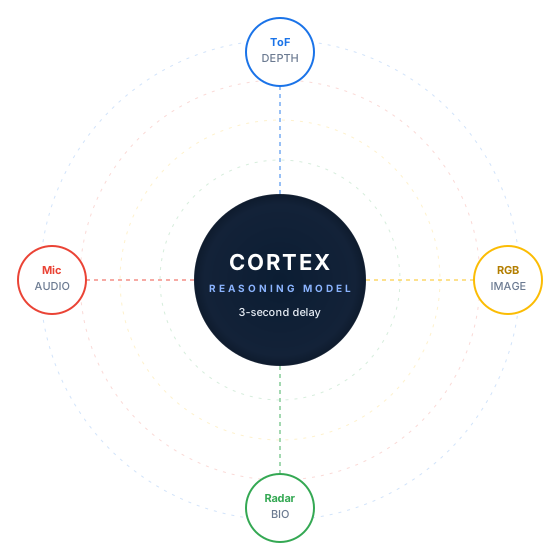
Speech-to-text labelled with action units, prosody, heart rate, and respiration — a structured record every claim can be audited against.
Every session is stored in Cortex. Maintains all claims across stakeholders, interviews, and ports of entry — ask it anything you want to know.
Four sensors. One time base. All data can stay on a local NVMe in air-gap mode — or stream to the cloud for cross-interview intelligence.
Cuts administrative workload and shortens the path from interview to decision — transcripts, metadata, and rationale are produced automatically.
Standardizes interview practice across operators, teams, and jurisdictions. A shared evidentiary rubric that does not depend on who is in the room.
Automates low-risk adjudication so human reviewers concentrate their time on the high-signal cases — inventories clear faster, not slower.
Consistent coverage across distributed posts and languages, so field outcomes don't depend on which office an interview happened to take place in.
Auditable logs, objective biometric signals, and bias-detection analytics on every session — the decision trail stands up to later scrutiny.
Every score traces back to the specific biometric and linguistic signals that produced it — meeting modern AI governance and audit expectations.